

From the Nile to the Euphrates: Creating the Harvard Semitic Museum

This exhibition closed on June 2, 2025
The Harvard Museum of the Ancient Near East is in the process of renewal and revitalization. As we move forward, it first seems right to return to our roots and examine where we came from. This exhibition celebrates the vision of Professor David Gordon Lyon (1852–1935), the museum’s founder and first director. Lyon assembled a rich collection of antiquities from what we now call the Middle East, including the Holy Land. (The term “Semitic” refers to the related languages and cultures of the Ancient Near East: Israelites, Phoenicians, Egyptians, Arameans, Babylonians, Arabs, and many others.)
In 1889 Lyon established the museum’s first galleries, and the present building was completed in 1903. A charismatic and tireless teacher, curator, and fundraiser, he traveled the world, developing a wide circle of colleagues and supporters to help him carry out his plans. To Lyon, this museum was not merely a building to display artifacts, but rather a busy institution devoted to teaching, research, and publication of ancient Near Eastern history, languages, and cultures. For more than a century, Lyon’s legacy has inspired students, scholars, and the public to explore Semitic contributions to world civilization. Today the Museum has grown through its acquisitions and sponsored archaeological excavations to house more than 40,000 Near Eastern artifacts.
Supplemental Content
The following content is meant to supplement the gallery experience of From the Nile to the Euphrates: Creating the Harvard Semitic Museum
View of Colossi of Amenophis III at Luxor
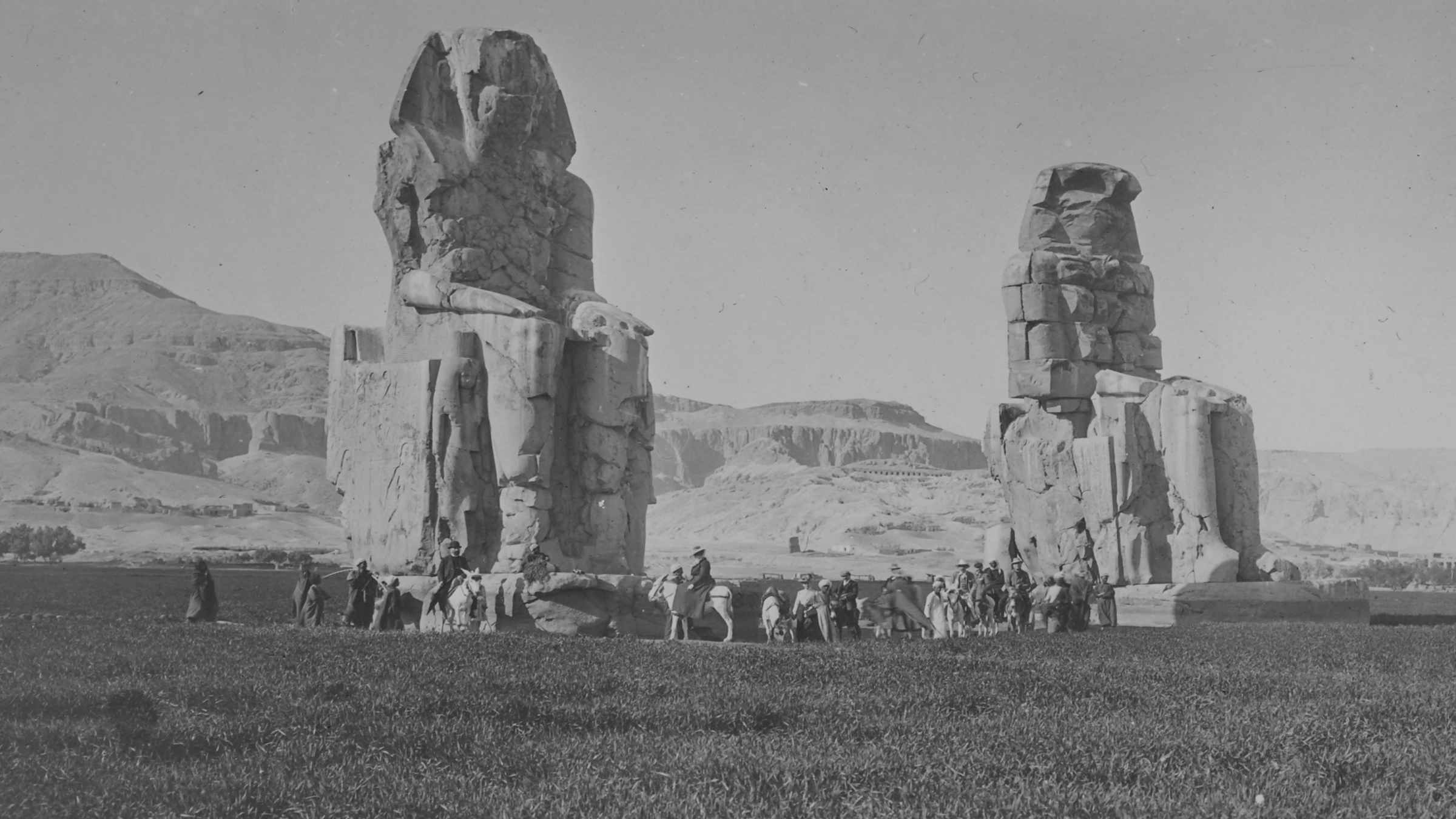

This selection of images from Lyon’s extensive collection of photographs and glass slides (many more are shown in the exhibit). Lyon used slides to illustrate his lectures, projecting them with a “magic lantern.” He purchased commercial slide sets until 1902, when he learned photography and began documenting Museum objects and his Middle Eastern journeys.
Director's Welcome
Learn More
Harvard Excavations at Samaria & The Giza Archives
Lyon was the driving force behind some of Harvard’s first archaeological explorations, at Samaria in Palestine. His star student, George A. Reisner, directed these digs. These links provides access to the original field documents from these archaeological projects.
For most of his life, David Gordon Lyon carried a small pocket notebook, which he used to document his daily experiences: meetings, travel, current events, and the weather. He later expanded his notes in more formal diaries and daybooks dedicated to specific subjects. Scans of his personal archive spanning sixty-five years, is now published online. More documents from the Museum’s archives— letters, photographs, and bills of sale—appear throughout this exhibition. They provide personal and professional insights into Lyon’s passionate dedication to his Museum and its mission.
Giza 3D (PC Only)
A collaboration between the Giza Project at Harvard and Dassault Systemes has digitally reconstructed the archaeological discoveries of the Giza Plateau.
The Art and Discovery of Idu's Tomb
“You’ve accomplished the impossible. Each painting is an archaeological record correct in details, but beautiful as a picture.” —George A. Reisner
Throughout his life, HMANE founder David Gordon Lyon (1852–1935) advocated archaeological exploration as a way to gain new knowledge about ancient cultures and to collect objects for exhibition. The Harvard University–Boston Museum of Fine Arts (HU-MFA) Expedition ran successfully on the Giza Plateau and at other sites in Egypt and Sudan from 1905 through 1947, directed by Lyon’s former student, Assyriologist-turned-Egyptologist George A. Reisner (1867–1942). Reisner’s skilled artist friend Joseph Lindon Smith painted elements of the sites. These images became an important type of documentation, since back then there was no color photography in archaeology.